Selected Books
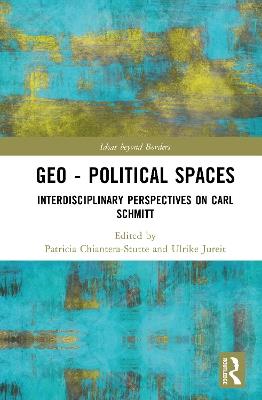 | Geo-Political Spaces: Interdisciplinary Perspectives on Carl Schmitt, co-edited with Ulrike Jureit, Routledge (Ideas beyond Borders), 2025. “The aim is therefore to open up a field of enquiry, specifically to investigate Schmitt’s sources in the geographical and geopolitical literature inside and outside Germany in order to reconstruct the genealogy of his idea of space, territory and international order. […] Geo – Political Spaces will appeal to academics and the well-informed public at large. It is also suitable for academic teaching, especially when it comes to historical theory, the concept of space or the history of political thought.” (Stuart Elden, University of Warwick) |
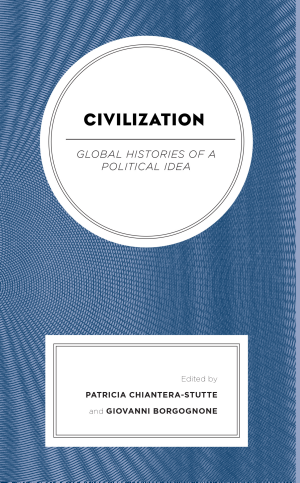 | Civilization: Global Histories of a Political Idea, co-edited with Giovanni Borgognone, Lexington Books, 2022. “It stands out from other similar works in taking seriously what can be termed a ‘Toynbee-an’ approach to the idea of civilisation. This approach involves viewing civilisations as the products of the creative agency of minorities of elites in different geographies and periods. As the introduction by Chiantera-Stutte and Borgognone and the first chapter by Chiantera-Stutte emphasise, the book offers this classic, if somewhat neglected, means of making sense of the contemporary forms of civilisational politics, ranging from references to civilisation in populist political movements in the West to Russia’s invasion of Ukraine […] The volume convincingly demonstrates how civilisations, though rooted in particular contexts, can be understood to be central concepts in geopolitics that are of relevance for broader international relations.” (Marc Sinan Winrow, History) “A fascinating, timely and perceptive set of essays exploring how ideas of civilization are used to justify a wide variety of political agendas from liberal democracy to ethno-nationalist authoritarianism.” (Ian Hall, Griffith University) The new book edited by Patricia Chiantera-Stutte and Giovanni Borgognone provides a rich and compelling analysis of the many narratives on, and around, “civilizations”, and how the latter concept continues to be used to support a variety of political agendas, from liberal democracy to ethno-nationalist authoritarianism. (Lorenzo Kamel, NAD) |
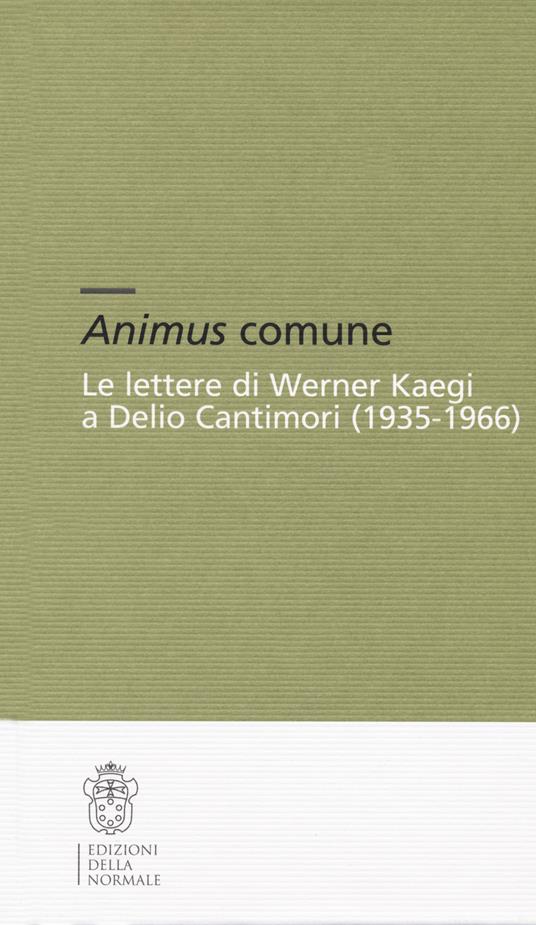 | Animus comune. Le lettere di Werner Kaegi e Delio Cantimori (1935-1966), Edizioni della Normale, 2019. “Si tratta di un confronto non privo di interesse anche per gli storici del pensiero politico, data la parabola dello storico romagnolo dal fascismo al comunismo nel secondo dopoguerra fino all’approdo ad una posizione più disincantata e indipendente negli anni successivi ai fatti di Ungheria. Kaegi e invece un umanista liberale, per quanto consapevole dell’importanza di Marx e fratello di un socialista ‘ragaziano’. Davvero interessante il modo con cui Kaegi chiede continuamente a Cantimori delucidazioni su Gramsci” (Salvatore Cingari, Il Pensiero Politico) “Questo volume curato con acribia filologica e intelligenza storiografica da Patricia Chiantera-Stutte, […] costituisce un contributo indispensabile a chiunque voglia meglio approssimarsi a questa grande coscienza, nella quale sembra si siano condensati i tormenti e le inquietudini del secolo scorso.” (Gennaro Barbuto, Storia del Pensiero Politico) |
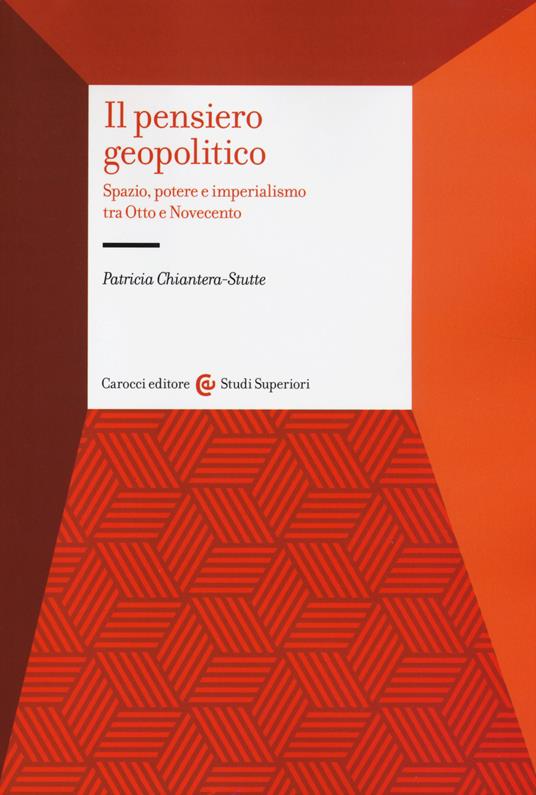 | Il pensiero geopolitico. Spazio, potere e imperialismo tra Otto e Novecento, Carocci, 2014. “La prospettiva dell’autrice mette chiaramente in luce i forti legami tra il pensiero politico e le conseguenti visioni geografiche e di ordinamento dello spazio geografico. Questa analisi dello sviluppo storico-dottrinale della geopolitica riesce a evidenziare aspetti e idee oggi importanti nel quadro dell’odierno ‘sistema’ internazionale. […] Ripensare lo spazio politico del XXI secolo è una delle sfide maggiori che ci attendono, il testo di Patricia Chiantera-Stutte può aiutarci a farlo con una maggiore consapevolezza storica.” (Andrea Beccaro, Istituto di Politica) |
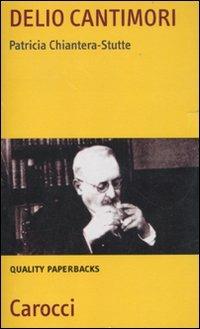 | Delio Cantimori: un intellettuale del 900, Carocci, 2011. “Il libro di Patricia Chiantera Stutte sulla vicenda biografica di Cantimori arriva a distanza di pochi anni da altre opere che hanno suscitato un dibattito acceso sulla figura di un grande storico ed uomo complesso e tormentato. L’autrice affronta la vicenda cantimoriana utilizzando toni pacati e prendendo distanza sin da subito dalle polemiche. […] I risultati sono senz’altro apprezzabili e questa sintesi appare utile e ben fatta.[…] Non a caso è proprio nel riuscire in più di una occasione ad intrecciare le esperienze vissute dell’uomo Cantimori con la sua dimensione intellettuale che si esprimono le migliori qualità di questa breve e pacata sintesi” (Daniele Santarelli, Quaderni eretici) |
 | Lessico di biopolitica, co-edited with R. Brandimarte, P. Di Vittorio, O. Marzocca, O. Romano, A. Russo and A. Simone, Manifestolibri, Roma, 2006 (French translation: Lexique de biopolitique, 2010). “La diversité des références philosophiques et sociologiques contemporaines atteste de la liberté de pensée des auteurs et démontre, s’il en était besoin, le caractère profondément transnational de ce qui est décrit dans l’ouvrage. Il constitue, par ailleurs, un exemple de la vigueur de la pensée critique dans les sciences sociales et il est manifeste pour l’équipe ayant conçu le livre que la pertinence d’un tel ouvrage est également motivée par le contexte du tournant néolibéral aisément observable depuis les années 1980.” (Jean-Christophe Coffin, ALTER) |
 | Res nostra agitur. Il pensiero di Delio Cantimori (1928-1937), Palomar, 2005. “Importante è che, senza pretese esaustive o dogmatiche, il volume miri a presentare una immagine complessiva di Cantimori, in cui ricerca storica ed elaborazione storiografica non siano separate dal suo travaglio etico-politico e in cui l’analisi delle discontinuità teorico-politiche non getti troppa ombra su quelle che sono state invece le continuità culturali, in primis il recupero della partecipazione politica del popolo alla vita dello Stato. Un esempio chiaro, questo volume, di come sia possibile fare ricerca storica della verità, facendo sberleffi tanto alle ortodossie ammuffite quanto ai revisionismi opportunistici.” (Carlo Altini, Il Manifesto) |
 | Von der Avantgarde zum Traditionalismus. Die radikalen Futuristen im italienischen Faschismus (1919-1933), Campus, 2002. “In der Bourdieu geschulten Studie von Patricia Chiantera-Stutte zeichnet das Schicksal dieser Heterodoxien am Beispiel zweier Strömungen nach: der von Mario Carli und Emilio Settimelli vertretenen autoritär-traditionalistischen Variante; und der von Curzio Suckert (Malaparte) und Mino Maccari repräsentierten «völkisch-populistischen» Richtung. Ein weiteres Kapitel gilt dem «Superfaschismus» Julius Evolas.” (bre, NZZ 15.2.2003) “Die Darstellung der politischen Situation setzt Chiantera-Stutte immer wieder in Zusammenhang mit den Veränderungen im intellektuellen Feld, und diese Verknüpfung von politischen, gesellschaftlichen Entwicklungen sowie philosophischen und künstlerischen Ideen macht ihre Arbeit spannend und innovativ.” (Hannah Ahlheim, sehepunkte) “Historians may find some of her general observations on the interactions between various factions of fascist intellectuals and politicians useful. She discusses a certain spectrum of oppositional attitudes towards the fascist state and the reasons why ardent and uncompromising fascists could be extremely vexing individuals in the ‘fabric of consensus’.” (Günter Berghaus, Journal of Contemporary History) |
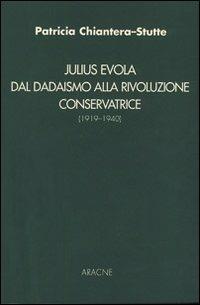 | Julius Evola: dal dadaismo alla rivoluzione conservatrice (1919-1943), Aracne, 2001. The book describes and analyses the life and work of Julius Evola. Based on archivial documents and on a wide survey of primary and secondary literature the book investigated the cultural and political activity of Julius Evola, in the esoteric milieus and in the conversative revolution, The relations to fascism and to intrasigenti are reported as well as Evola’s idea of racism. |
Selected Articles and Chapters
- La grande accelerazione: il nuovo populismo americano, 2026.
- The State as a ‘form of life’ and the space as Leistungsraum: the reception of Ratzel in the First and Second World Wars, Geographica Helvetica 78(1), 2023.
- Resonanz und Rezeption. Werk und Wirkung Friedrich Ratzels im internationalen Vergleich, with Ulrike Jureit, Geographica Helvetica 78, 59-63, 2023.
- Geographies of oblivion. Geopolitics and memory in the cold war dystopic literature, 2022.
- Civilisations and Political Elites in Critical Times: The Perspectives of Arnold J. Toynbee and Samuel P. Huntington, 2021.
- Ratzels Stone Guest: the Art of Politics in the Work of Friedrich Ratzel, 2018.
- Mob, people, crowds and masses: Mass Psychology and Populism, 2018.
- The revenge of geopolitics: space as a metaphor of fear in the clash of civilizations, 2017.
- Una dottrina Monroe per la Mitteleuropa, 2016.
- Nicholas J. Spykman: la geopolitica nella genesi delle relazioni internazionali, 2015.
- Space, Grossraum and Mitteleuropa in Some Debates of the Early Twentieth Century, 2008.
- Cultures of Populism and the Political Right in Central Europe, with Andrea Peto, 2003.